
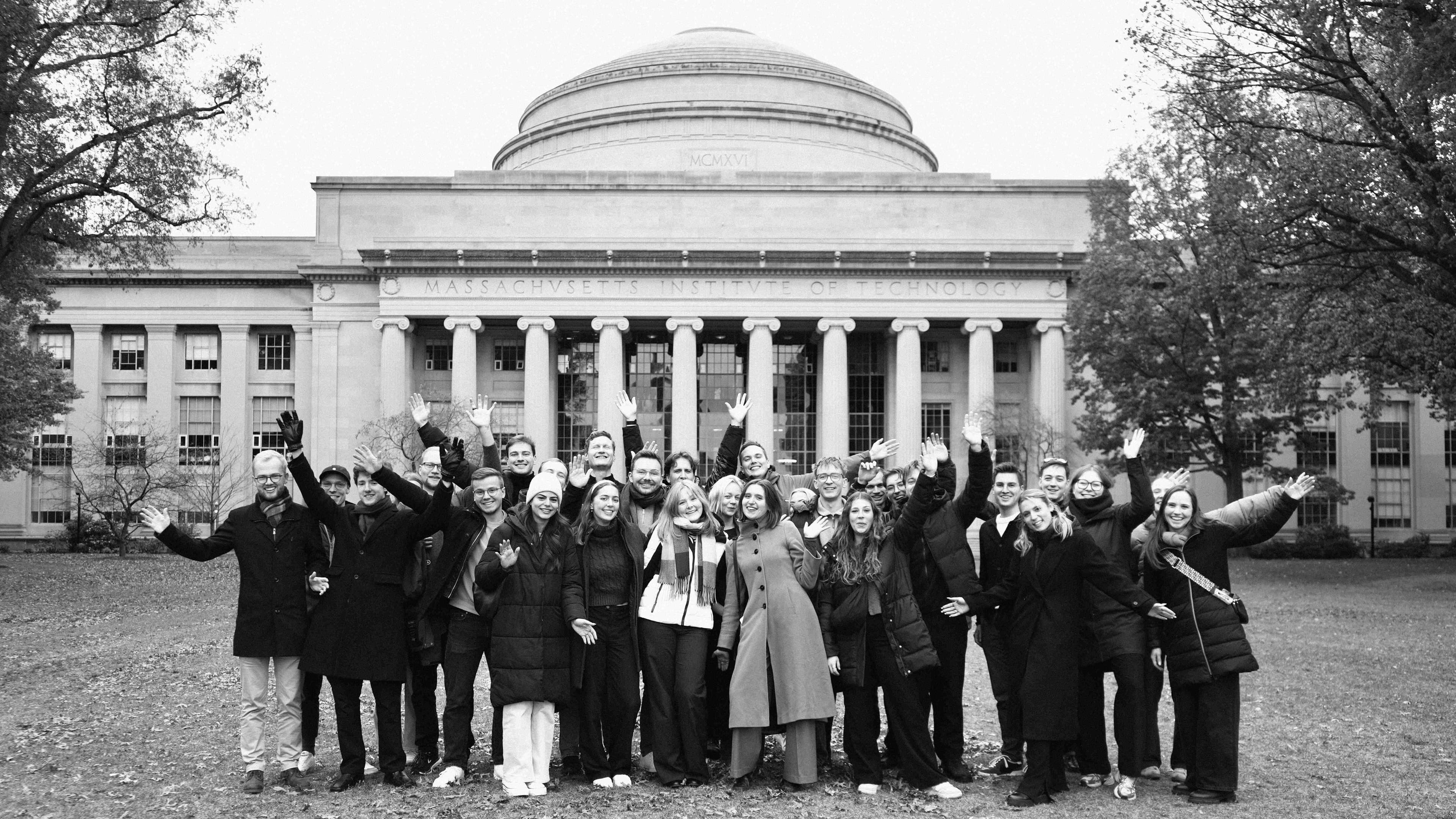
Attending the 17th German American Conference at Harvard
"The relationship is at a crossroads." That was the framing of the 17th German American Conference at Harvard's Kennedy School, and across three days of panels and conversations, nobody really argued with it. A thousand-plus students, founders, researchers, and policymakers from both sides of the Atlantic gathered to work out what comes next - for deep tech, defense, autonomy, and the broader partnership underneath all of it.
The room
GAC puts people in the same room who usually aren't. Policy experts and deep-tech founders. AI researchers and undergraduates. The students were often the ones asking the questions that forced everyone else to sharpen their answers.
The shape of the conference worked. Morning keynotes set the agenda, afternoon panels went narrow, and the evenings left space for the conversations that mattered most. Three days compressed what would otherwise take months of scattered reading and accidental encounters.
People came to share, not to defend. That was the surprise. The format pushed it - small groups, accessible speakers, enough unstructured time for actual exchange.
Reinventing "Made in Germany"
Michael Brigl's[1] talk on "Reinventing 'Made in Germany' for the Next Decade" landed hard. The argument: Germany's industrial success was built on precision manufacturing and engineering excellence, but the next decade asks for different fundamentals. Long-term bets on emerging tech, patient capital, and a tolerance for sectors that aren't yet proven.
The deep-tech panel echoed it. Hardware is hard. Manufacturing at scale is harder. The U.S. and Germany both have the ingredients - research institutions, capital, talent - but the ingredients sit in different silos. Coordination is the part nobody has solved.
Hans Uszkoreit's[2] session on AI reframed the technical questions as policy ones. Where do we draw the line on autonomy? How do we regulate systems we can't audit at the speed they ship? What does international cooperation look like when AI development is a competitive weapon?
These weren't theoretical. The people asking them were the ones writing the policies, funding the research, and shipping the systems.
MIT and the hardware reality
The MIT campus tour was a highlight. Hardware labs, welding bays, design studios - the physical infrastructure where ideas turn into prototypes. Students debugging a robotics build in real time. Iteration marks worn into workshop equipment. The unromantic timeline from concept to working hardware.
Deep tech isn't only breakthrough research. It's access - to tools, to expertise, to the iteration cycles that let you fail quickly and learn faster. MIT's campus is what sustained investment in physical infrastructure looks like after a few decades of it.
What made it possible
We got there through the HPI Engine and the Flow Factory at the University of Münster. Thanks to Thomas Haskamp[3], Frank Pawlitschek[4], and David Hahn[5] for making it happen, and to Kai Krautter[6] and the GAC team for running a conference of this size at this level of quality. None of that is small.
What I valued most was the people. Fresh perspectives, real curiosity, a shared sense that the questions on the table actually matter. Talking about policy in the abstract is easy. Doing it in a room of people actively shaping the outcomes is the part that earns its keep.
Takeaways
International collaboration needs infrastructure, not just intentions. Shared research programs, exchange networks, people willing to bridge two bureaucracies at once.
Hardware needs patient capital. Deep-tech timelines don't fit standard venture cycles. The funding models have to bend, or the work doesn't happen.
AI policy is being written now. Not in white papers - in deployment decisions, regulatory choices, research priorities. The people making those decisions were in the room.
Access compounds. MIT's campus is the long tail of consistent investment. Lectures aren't enough. Students need labs, tools, and time to build.
Progress happens when people from different backgrounds show up, share what they know, and commit to figuring out the next step together. GAC delivered on that.